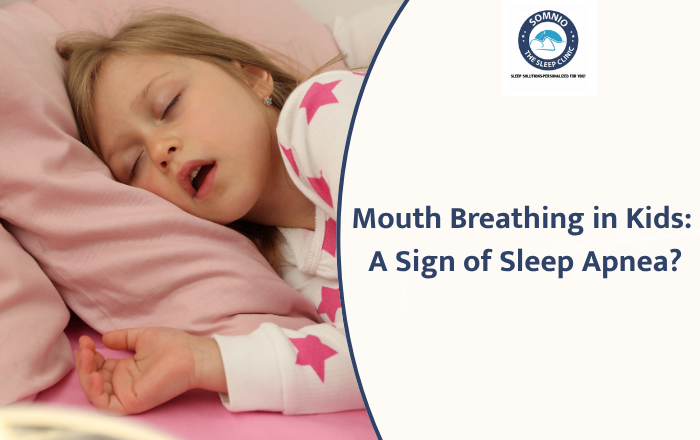
If you’ve noticed your child constantly breathing through their mouth especially during sleep it might seem harmless at first. Maybe they just have a cold or allergies. Maybe it’s just how they breathe. But here’s where it gets serious: chronic mouth breathing in children can be a warning sign of sleep apnea. And sleep apnea isn’t just about snoring. It’s a sleep disorder that can quietly affect your child’s growth, mood, focus, and overall health.
So let’s break it down. What causes mouth breathing? When should you be concerned? And how can you tell if sleep apnea is part of the picture?
What Is Mouth Breathing and Why Does It Happen in Kids?
The body prefers nasal breathing Breathing through the nose is the way our bodies are built to work. The nose warms, filters, and humidifies the air before it reaches the lungs. It also plays a role in proper jaw and facial development, especially in children.So why do some kids breathe through their mouths instead?
There are a few common reasons:- Nasal congestion due to allergies, colds, or sinus issues
- Enlarged tonsils or adenoids blocking the airway
- Habitual breathing patterns developed over time
- Structural issues like a deviated septum or narrow nasal passages
Is Mouth Breathing Always a Sign of Sleep Apnea?
Not always. But it’s something to pay attention to. Some kids breathe through their mouths because of simple congestion. But if your child mouth breathes every night, snores loudly, or seems tired during the day despite sleeping enough hours, sleep apnea might be the reason. How sleep apnea and mouth breathing are linked Obstructive sleep apnea happens when the airway gets blocked during sleep. This can cause loud snoring, pauses in breathing, or even gasping for air. Mouth breathing often goes hand-in-hand with these symptoms because the child can’t get enough air through their nose. When this happens repeatedly, sleep becomes light and disrupted—and that takes a toll on the body.Signs of Sleep Apnea in Children
Sleep apnea doesn’t always look like what we expect. In children, it often shows up in subtle ways, like:- Snoring most nights
- Breathing pauses during sleep
- Restless sleep or sleeping in strange positions
- Night sweats
- Waking up tired despite a full night’s sleep
- Daytime sleepiness or crankiness
- Trouble paying attention at school
- Hyperactivity or behavior problems that mimic ADHD
How Sleep Apnea Affects Your Child’s Development
It’s not just about poor sleep When a child’s breathing is interrupted at night, their body doesn’t get enough oxygen. Over time, this can affect physical and mental development. Physical effects- Slower growth due to interrupted hormone cycles during sleep
- Weakened immune function
- Changes in face shape, dental alignment, or bite from years of mouth breathing
- Mental and emotional effects Poor focus, low motivation, and learning challenges
- Mood swings, anxiety, or being labeled as “difficult”
- Feeling tired all the time without knowing why
When to Take Action
You know your child better than anyone If something feels off loud snoring, restless nights, tired days it’s worth looking into. Kids don’t always complain about poor sleep because they don’t know any different. It’s just their “normal.” But mouth breathing and other symptoms shouldn’t be ignored. What happens next Diagnosing sleep apnea in kids usually starts with a sleep study. This records how your child breathes during the night and checks for any pauses or disruptions. Depending on the results, treatment might involve:- Removing enlarged tonsils or adenoids if they’re blocking the airway
- Encouraging nasal breathing through breathing exercises or orthodontic support
- Using special devices to keep the airway open during sleep