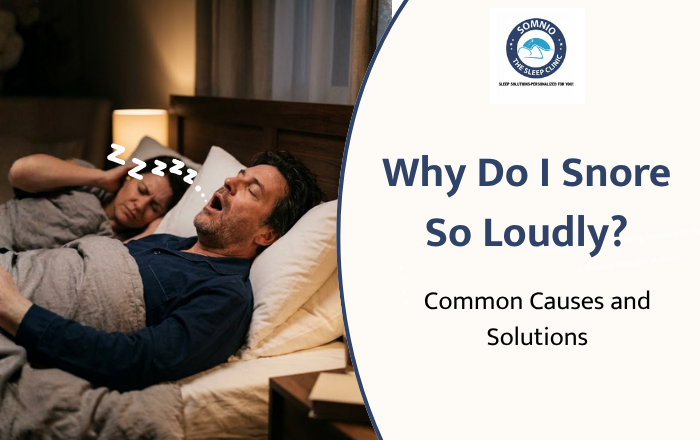
If your partner keeps elbowing you awake at 2 AM, or your family jokes that they can hear you from the next room, you’ve probably typed “why do I snore so loudly” into Google more than once. You’re not alone. Snoring affects a huge chunk of adults, and while it’s often brushed off as harmless, loud, persistent snoring can sometimes point to something more serious, like Obstructive Sleep Apnea.
The good news? Most cases of snoring have identifiable causes and manageable solutions.
Quick Summary Box
- Snoring happens when air struggles to move freely through your throat during sleep, causing tissues to vibrate.
- Common causes of snoring include nasal blockage, weight gain, alcohol, sleep position, and airway anatomy.
- Loud snoring with gasping, choking, or daytime fatigue may indicate Obstructive Sleep Apnea and needs medical evaluation.
- Snoring solutions range from simple lifestyle changes to CPAP therapy or surgery, depending on the cause.
- A proper sleep study for snoring helps confirm the diagnosis and guide the right treatment plan.
What Causes Loud Snoring?
Snoring occurs when the flow of air through your mouth and nose is partially blocked during sleep. As you breathe, the soft tissues in your throat—like the soft palate, uvula, and tongue base—relax and vibrate against each other, creating that familiar rattling sound. The narrower the airway, the louder the vibration.
Common Causes of Snoring
Several factors can narrow your airway or increase tissue vibration:
- Nasal congestion or blockage – allergies, a deviated septum, or sinus infections force you to breathe through your mouth, increasing vibration.
- Excess weight – extra tissue around the neck can press on the airway.
- Sleep position – lying on your back lets the tongue fall backward, partially blocking airflow.
- Alcohol and sedatives – these relax throat muscles more than usual.
- Age – throat muscles naturally lose tone over time.
- Anatomy – a thick soft palate, enlarged tonsils, or a naturally narrow throat can contribute.
- Chronic mouth breathing – often linked to nasal issues or habit.
Risk Factors
You’re more likely to snore loudly if you:
- Are overweight or have a larger neck circumference
- Smoke regularly
- Have a family history of snoring or sleep apnea
- Are middle-aged or older
- Have untreated allergies or sinus problems
- Drink alcohol close to bedtime
Simple Snoring vs Obstructive Sleep Apnea
Not all snoring is equal. Some is harmless; some needs attention.
| Feature | Simple Snoring | Obstructive Sleep Apnea |
|---|---|---|
| Breathing pauses | Rare or none | Frequent pauses (10+ seconds) |
| Daytime sleepiness | Mild or none | Often significant |
| Gasping/choking at night | Uncommon | Common |
| Morning headaches | Rare | Fairly common |
| Bed partner concern | Noise only | Concerned about breathing stops |
| Needs medical evaluation | Usually not urgent | Yes, recommended |
If you recognize the second column, it’s worth getting a proper snoring diagnosis rather than assuming it’s “just snoring.”
Symptoms Worth Paying Attention To
While loud noise is the obvious symptom, watch for:
- Waking up with a dry mouth or sore throat
- Restless, non-refreshing sleep
- Morning headaches
- Difficulty concentrating during the day
- Irritability or mood changes
- Your partner noticing pauses in your breathing
These symptoms, especially combined, are red flags for sleep disorders beyond simple snoring.
How Is Snoring Diagnosed?
An ENT specialist for snoring or a sleep medicine doctor typically starts with:
- A detailed history of your sleep habits and symptoms
- Physical examination of the nose, mouth, and throat
- Assessment for nasal blockage or enlarged tonsils
- A sleep study for snoring, also called polysomnography, if sleep apnea is suspected
A sleep study records your breathing patterns, oxygen levels, and brain activity overnight, either at a sleep clinic or, in some cases, through a home-based test. This step is often the deciding factor between simple lifestyle advice and a structured medical treatment plan.
Snoring Solutions: Treatment Options
Treatment depends entirely on what’s causing your snoring. There’s no single fix that works for everyone, and a qualified doctor should confirm the underlying cause before recommending a plan.
Home Remedies vs Medical Treatment
| Approach | Best For | Limitations |
|---|---|---|
| Sleeping on your side | Positional snoring | Doesn’t help anatomical causes |
| Weight loss | Weight-related snoring | Takes time, needs consistency |
| Nasal strips/sprays | Nasal congestion | Won’t fix throat-based snoring |
| Avoiding alcohol before bed | Muscle-relaxation snoring | Limited if other causes exist |
| CPAP therapy | Moderate-to-severe sleep apnea | Requires nightly use, adjustment period |
| Oral appliances | Mild-to-moderate cases | Needs dental fitting |
| Surgery | Structural blockages | Reserved for specific cases |
Lifestyle Changes for Snoring
- Maintain a healthy body weight
- Sleep on your side instead of your back
- Treat nasal allergies or congestion
- Limit alcohol, especially in the evening
- Establish a consistent sleep schedule
- Stay hydrated, as dry airways can worsen vibration
Medical Treatments
For confirmed Obstructive Sleep Apnea, CPAP therapy remains one of the most well-established treatments. It works by delivering steady air pressure through a mask, keeping the airway open throughout the night. Oral appliances that reposition the jaw can help select patients with mild to moderate symptoms.
Surgery
In select cases, when structural issues like enlarged tonsils, a deviated septum, or excess soft palate tissue are the primary cause, surgical correction may be considered. This is typically explored only after non-surgical snoring solutions haven’t worked, and the decision should always be individualized.
When Should You Consult a Specialist?
You don’t need to rush to a doctor for occasional, mild snoring. But it’s time to seek professional evaluation if you notice:
- Pauses in breathing during sleep (often reported by a partner)
- Choking or gasping sounds at night
- Excessive daytime sleepiness despite a full night’s sleep
- Morning headaches
- High blood pressure without another clear cause
- Snoring that has become progressively louder or more frequent
At Somnio The Sleep Clinic in Filmnagar, Hyderabad, patients experiencing these symptoms can undergo a thorough ENT evaluation and, if needed, a sleep study to determine whether the snoring is simple or linked to Obstructive Sleep Apnea. Getting an accurate snoring diagnosis is the first real step toward the right treatment, rather than guessing based on symptoms alone.
Meet Our Doctors | Visit Our Clinic
Somnio The Sleep Clinic, located in Filmnagar, Hyderabad, specializes in the diagnosis and treatment of snoring, sleep apnea, and other sleep disorders.
Dr. Sukhvinder Bindra & Dr. Gayatri Moghe
If loud snoring is affecting your sleep, overall health, or quality of life, consulting a snoring specialist in Hyderabad can help identify the underlying cause and guide you toward the most effective treatment options.
Frequently Asked Questions
1. Why do I snore so loudly every night?
Loud, nightly snoring usually points to a consistent airway obstruction, such as nasal congestion, excess throat tissue, or sleeping on your back. If it happens every night rather than occasionally, it’s worth having an ENT specialist evaluate the underlying cause.
2. Is loud snoring always a sign of sleep apnea?
No. Many people snore loudly without having sleep apnea. However, if snoring is paired with breathing pauses, gasping, or daytime fatigue, a sleep study can help rule out Obstructive Sleep Apnea.
3. Can losing weight stop snoring?
For weight-related snoring, losing even a modest amount of weight can reduce airway narrowing and ease symptoms. It won’t help snoring caused by anatomy or nasal blockage, though.
4. What is the best sleeping position to reduce snoring?
Side sleeping is generally better than back sleeping, since it prevents the tongue from falling backward and blocking the airway. Some people use positional pillows or devices to help maintain this position overnight.
5. Does CPAP therapy really work for snoring?
CPAP therapy is one of the most studied treatments for sleep apnea-related snoring. It keeps the airway open using steady air pressure, though it requires consistent nightly use and an adjustment period.
Have questions? We’re just a message away! Contact us on WhatsApp — Click Here to Chat with Us