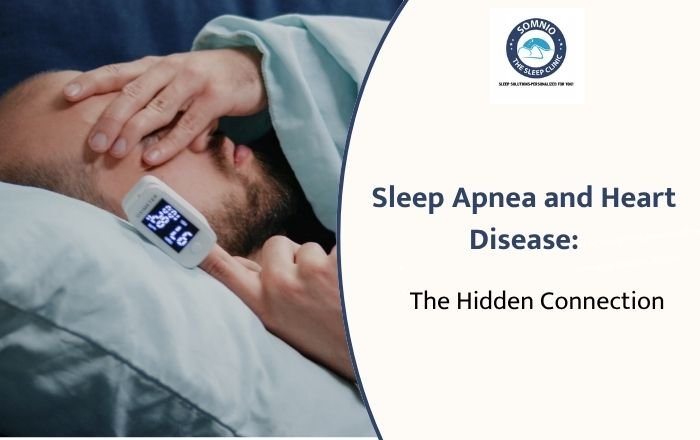
Most people think of snoring as a harmless habit, or at worst something that annoys a partner. But for a lot of people, that heavy nightly snoring is the sound of the body struggling to breathe. And when the body stops breathing again and again through the night, the heart pays the price.
The link between sleep apnea and heart disease is one of the most overlooked risks in modern healthcare. You can feel perfectly fine during the day and still be putting real strain on your heart every single night.
What Is Sleep Apnea, Exactly?
Sleep apnea is a condition where your breathing repeatedly stops and starts while you sleep. The most common type is obstructive sleep apnea, where the muscles at the back of the throat relax too much and block the airway. Each time the airway closes, your oxygen level drops, and your brain briefly wakes you up to restart breathing. This can happen dozens or even hundreds of times a night, often without you remembering any of it.
The tricky part is that these pauses are silent to the person having them. You might sleep eight hours and still wake up exhausted, with no idea that your night was one long fight for air. That is why so many cases go undiagnosed for years.
How Are Sleep Apnea and Heart Disease Connected?
Sleep apnea and heart disease are connected because every breathing pause forces the heart to work harder under stress. When oxygen levels fall, the body sounds an internal alarm. Your heart rate and blood pressure spike, adrenaline floods your system, and this cycle repeats all night long instead of letting your heart rest.
Over months and years, this constant strain damages the cardiovascular system. Think of it like revving a car engine hard, then slamming the brakes, over and over, all night. The engine wears out faster. Your heart works the same way. Sleep is supposed to be the time your blood pressure dips and your heart recovers. In someone with untreated apnea, that recovery never really happens.
The Chain Reaction Inside Your Body
A few things happen when breathing keeps stopping:
- Intermittent hypoxia, the repeated drop in oxygen, triggers inflammation and stress on blood vessel walls.
- Blood pressure surges each time you gasp back to life, and over time this can lead to sustained hypertension.
- The nervous system stays stuck in “fight or flight” mode overnight, which keeps the heart under pressure.
- Blood becomes more prone to clotting, raising the risk of blockages.
Individually, each of these is a strain. Together, night after night, they set the stage for serious heart problems.
Which Heart Conditions Are Linked to Sleep Apnea?
Untreated obstructive sleep apnea has been tied to several cardiovascular conditions. Research consistently shows higher rates of these problems in people with moderate to severe apnea:
- High blood pressure (hypertension): Sleep apnea is one of the most common causes of blood pressure that stays high even with medication.
- Atrial fibrillation: An irregular, often rapid heartbeat that raises stroke risk. Apnea makes it more likely and harder to control.
- Coronary artery disease: The repeated oxygen drops and inflammation can speed up the narrowing of heart arteries.
- Heart failure: A tired, overworked heart can gradually lose its ability to pump efficiently.
- Stroke: The combination of high blood pressure, irregular rhythm, and clotting risk increases the odds of a stroke.
If you already have a heart condition, undiagnosed apnea can quietly make it worse and blunt how well your treatment works. This is why many cardiologists now ask about sleep and snoring during heart checkups.
What Are the Warning Signs of Sleep Apnea?
The most common sleep apnea symptoms include loud snoring, gasping or choking during sleep, and feeling tired no matter how long you sleep. Many people first find out because a partner notices they stop breathing at night.
Here are the signs worth paying attention to:
- Loud, chronic snoring, often broken by silent pauses
- Waking up gasping or choking
- A partner witnessing you stop breathing
- Morning headaches
- Dry mouth or sore throat on waking
- Feeling groggy and unrefreshed despite a full night’s sleep
- Daytime sleepiness, dozing off at your desk or while driving
- Trouble concentrating, memory lapses, or mood changes
- Waking often to urinate
- High blood pressure that is hard to control
You do not need every symptom to have apnea. Loud snoring plus daytime tiredness alone is enough reason to get checked, especially if heart disease runs in your family.
Who Is at Higher Risk?
Anyone can develop sleep apnea, but certain factors push up the odds. Being overweight is a major one, since extra tissue around the neck can crowd the airway. Age, a family history of apnea, a thick neck, enlarged tonsils, and a naturally narrow airway all play a role. Men are diagnosed more often, though women are affected too, particularly after menopause, and are frequently missed.
Lifestyle matters as well. Alcohol in the evening, sedatives, and smoking can all worsen airway collapse and inflammation. If you tick several of these boxes and you snore heavily, the connection to your heart health is worth taking seriously.
How Is Sleep Apnea Diagnosed?
Sleep apnea is diagnosed with a sleep study, which records your breathing, oxygen levels, heart rate, and sleep patterns overnight. The results tell doctors how many times your breathing stops each hour, which confirms whether you have apnea and how severe it is.
At Somnio The Sleep Clinic the process starts with a proper conversation about your sleep, your symptoms, and your heart health. Depending on your situation, testing can be done in a comfortable clinic setting or, in suitable cases, with a home sleep study so you sleep in your own bed. The goal is a clear, accurate diagnosis rather than guesswork, so any treatment is built around what your body is actually doing at night.
How Is Sleep Apnea Treated?
The good news is that sleep apnea is very treatable, and treating it can directly protect your heart. The right approach depends on how severe your apnea is and what is causing it.
CPAP Therapy
For moderate to severe cases, CPAP therapy is the most effective and widely used treatment. A CPAP machine gently delivers a steady stream of air through a mask, keeping your airway open all night so breathing never stops. Studies show that consistent CPAP use can lower blood pressure, ease strain on the heart, and improve daytime energy. Modern machines are quiet, compact, and far more comfortable than the bulky devices people often imagine.
Oral Appliances and Other Options
For milder apnea or people who cannot tolerate CPAP, a custom oral appliance that repositions the jaw can keep the airway open. Positional therapy helps those who only have apnea when sleeping on their back. In some cases, surgery to remove blockages may be considered.
Lifestyle Changes That Support Your Heart
Weight loss, cutting back on evening alcohol, quitting smoking, and treating nasal congestion can all reduce the severity of apnea. These changes are not a full replacement for medical treatment in serious cases, but they support it and benefit your heart at the same time.
Whatever the plan, the aim is the same. Keep you breathing steadily through the night so your heart finally gets the rest it needs.
Why Treating Sleep Apnea Protects Your Heart
Here is the encouraging part. When apnea is properly treated, a lot of the extra strain on the heart eases up. Blood pressure often improves, sleep quality returns, and the constant overnight stress on the cardiovascular system settles down. People frequently say they feel sharper, calmer, and more energetic within weeks.
Treating apnea will not undo every risk on its own, but it removes a hidden factor that can quietly sabotage your heart health and any cardiac treatment you are already on. That is a powerful reason to get checked rather than wait.
Frequently Asked Questions
1. Can sleep apnea really lead to heart disease?
Yes. Untreated obstructive sleep apnea significantly increases the risk of high blood pressure, heart attack, heart failure, stroke, and abnormal heart rhythms.
2. Does everyone who snores have sleep apnea?
No. While snoring is common, loud snoring accompanied by choking, gasping, or daytime sleepiness should be evaluated by a sleep specialist.
3. Can treating sleep apnea lower blood pressure?
Yes. Effective treatment often helps reduce blood pressure, particularly in patients with resistant hypertension.
4. Is sleep apnea curable?
Some patients improve significantly with weight loss or surgery, while others require long-term management using CPAP or oral appliances.
Take the First Step Toward Better Sleep and Better Heart Health
Your heart never rests—and neither should your breathing. If you or a loved one experiences loud snoring, daytime fatigue, or interrupted sleep, don’t ignore these warning signs. Sleep apnea is a treatable condition, and early intervention can significantly improve both your sleep quality and long-term heart health.
At Somnio The Sleep Clinic, Filmnagar, Hyderabad, our experienced sleep specialists provide comprehensive sleep evaluations, advanced sleep studies, and personalized treatment plans for sleep apnea, snoring, insomnia, and other sleep disorders.